Introduction:
Oral health, which relates to the condition of your mouth, teeth, jaw, etc, contributes largely to a person’s systemic health. Broadly, many people associate poor oral health with having dental caries or needing implants; however, many fail to recognize the impact that it has on a more holistic approach—our systemic health.
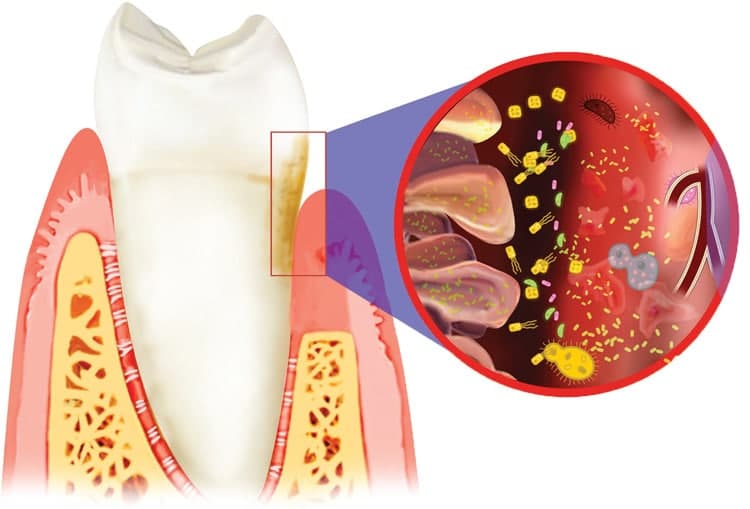
Dental caries are caused by cariogenic bacteria, commonly known as Streptococcus mutans (S. mutans), which are commonly attributed to cause tooth decay and demineralization of the tooth’s structure. However, persistent poor oral hygiene allows some of these oral germs to enter the bloodstream and travel to various regions, which then affect the body’s function and possibly cause disorders. For example, periodontal diseases have been associated with impaired glycemic control in diabetes, where other systemic disorders, such as rheumatoid arthritis, diabetes, and cardiovascular disease, are partly attributed to chronic inflammation. Furthermore, during highly inflamed/infected cases, cytokines are released to act as a defense barrier against inflammation and can travel to other areas in the body. Consequently, though, circulation can further encourage inflammation and disorders in these regions.
The study aimed to quantify the relationships between periodontitis and diabetes and between dental caries and hypertension using nationally representative United States data.
Methods:
The study conducted a cross-sectional analysis, utilizing the National Health and Nutrition Examination Survey’s (NHANES) data from 2017-2020. Across 13,772 adult test samples, the researchers examined whether oral health conditions were associated with systemic diseases from clinical dental examinations and self-reported medical information. The main oral-health variables were periodontitis and dental caries, while the systemic outcomes included diabetes, hypertension, stroke, cardiovascular disease, etc.
For missing values and conditions, the researchers conducted a Multivariate Imputation by Chained Equations to add credibility by assessing various probable scenarios rather than solely relying on one factor. Furthermore, the researchers used chi-square tests and Cramer’s V to measure the significance between oral and systemic diseases and determine whether they are statistically significant.
Results:
The strongest finding was the association between dental caries and high blood pressure, which the researchers deemed statistically significant. In the study, 1,070 people were affected with both dental caries and high blood pressure, while 1,642 people had dental caries but did not have high blood pressure. Calculating a p-value of 4.07 x 10⁻⁹, which is lower than 0.05, the result is statistically meaningful.
However, the relationship’s strength remains limited, as Cramer’s V was 0.119, indicating that cavities and high blood pressure were correlated but not strongly. Simply put, people with cavities are more likely to have high blood pressure, but the cavities alone do not explain the cause of the blood pressure. Furthermore, when the study compared cavities to other diseases, such as diabetes, heart attacks, and strokes, the relationships were also very weak. For example, the Cramer’s V value for diabetes was 0.016, 0.009 for heart attacks, and 0.006 for strokes. As the value numbers are close to zero, the data indicates that the cavities had almost no influence on those diseases in the study.
Conclusion:
Overall, this study suggests that oral health may be connected to overall health, especially in the relationship between dental caries and high blood pressure. Although this association was statistically significant, the low Cramér’s V value, being close to zero, indicates that the relationship was weak. Therefore, people with cavities were more likely to also have high blood pressure, but cavities alone do not explain or cause hypertension.
The study also found very weak associations between dental caries and other diseases, such as diabetes, heart attacks, and strokes. Because this study only shows associations, not causation, the results should be interpreted carefully due to the limitation of direct data that can support the effect of cavities on other diseases. There can be other factors, such as diet, smoking, income, and access to dental care, that can influence an individual’s oral health. Future research should examine whether improving oral health can directly reduce the risk of systemic diseases like hypertension.