Introduction
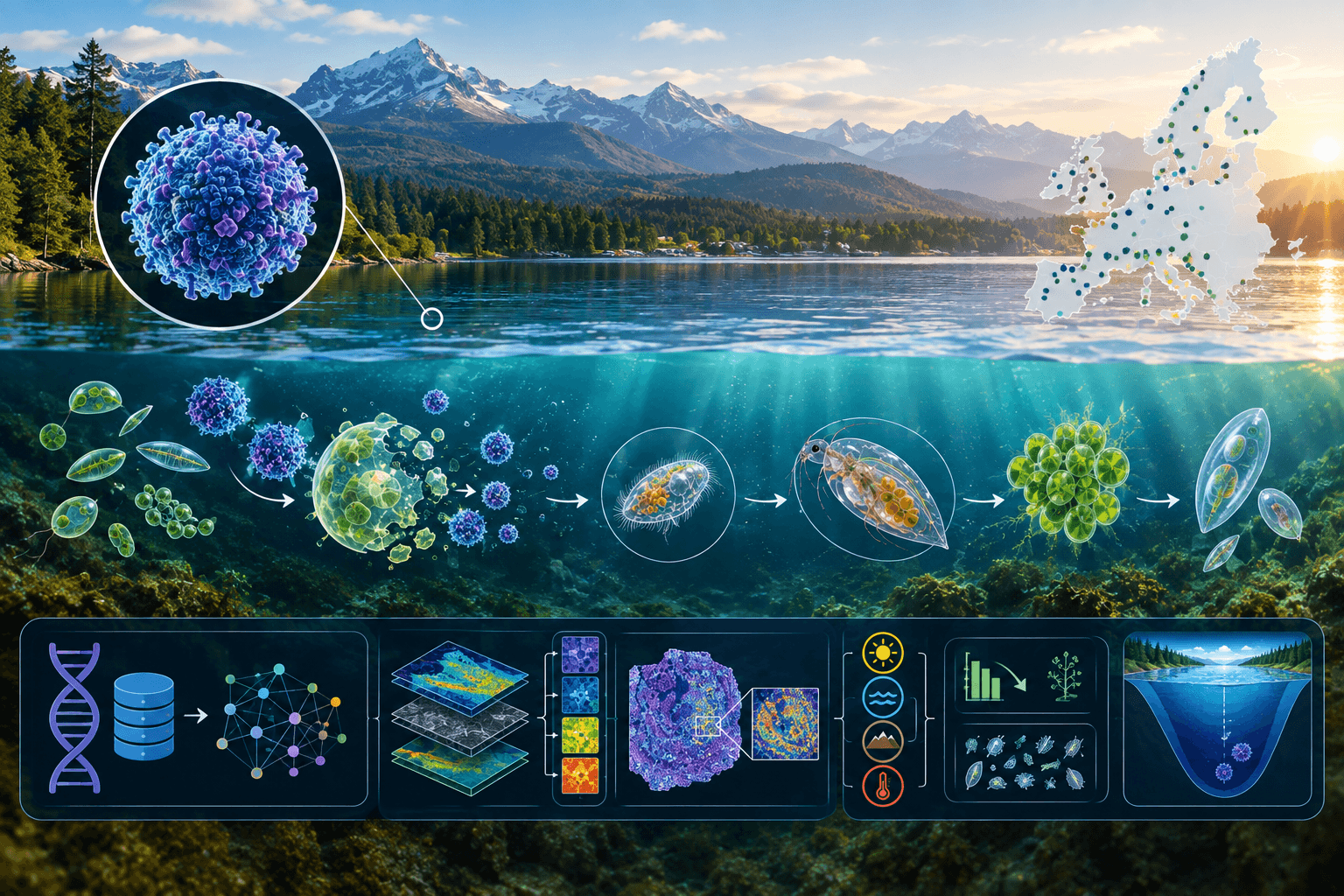
Giant viruses are much more common and diverse than scientists once thought. Most of the research on these viruses has been focused on the ocean, so not much is known about what they do in freshwater lakes. They found a group of viruses called Nucleocytoviricota which infects organisms such as algae, protists, fungi, and other aquatic organisms.
The researchers wanted to find out where these viruses occur across Europe, which organisms they might interact with, and what effects they might have on the way a lake's ecosystem's function. They have collected samples from 87 lakes stretching from southern Italy to northern Norway, covering about 30 degrees of latitude.
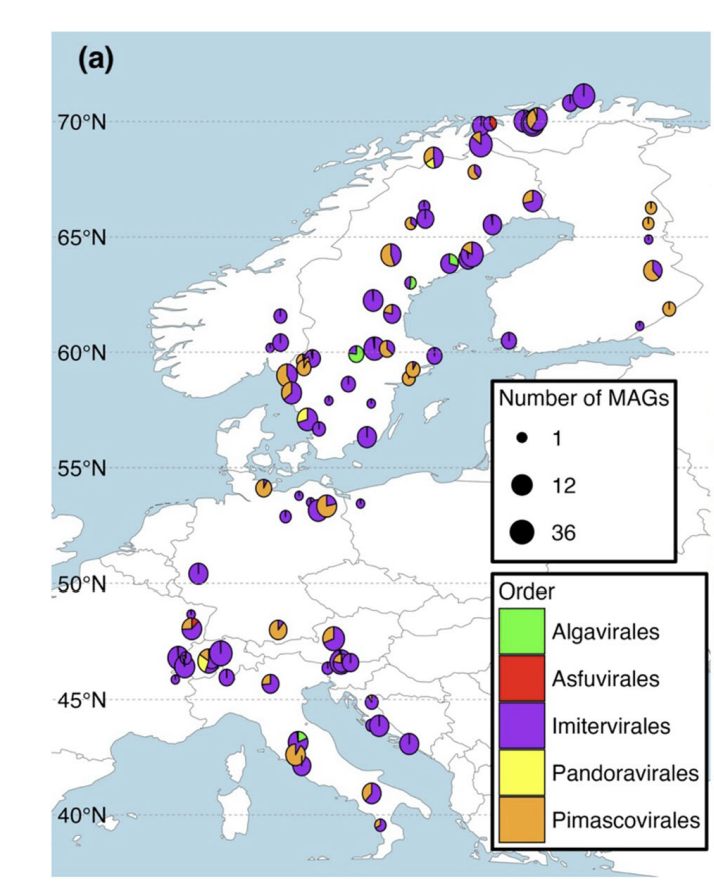
Fig. 3 | Taxonomic and functional distribution of nucleocytoplasmic large DNA viruses (Nucleocytoviricota) across European lakes
Methods
The researchers collected samples from the surface of the water from the 87 lakes and used shotgun metagenomic sequencing to examine the DNA present in each sample. This allowed them to search for known genomes as well as genetic material from potential hosts.
They recovered 208 metagenome-assembled genomes also known as the MAGs, belonging to Nucleocytoviricota. They compared these genomes with previously known viruses to determine their common evolutionary patterns.
To investigate possible virus host relationships, the researchers compared the abundance of genomes with eukaryotic DNA found in the same lakes. They also looked for evidence of horizontal gene transfer, where genetic material moves between organisms, to provide additional support for some of the predicted relationships.
Analysis
The researchers compared different viruses across the different lakes and looked at how their abundance and genetic features changed with different latitudes, temperature, lake depth, organic matter, and other environmental conditions.
They also examined which organisms were most often associated with the viruses. This included phytoplankton, protists, zooplankton, and fungi.
Another part of the analysis focused on total primary production, which measures how much organic matter is produced by photosynthetic organisms in a lake. This helped the researchers examine whether the presence of Nucleocytoviricota was connected to larger changes in lake productivity.
Results
The researchers found a much larger variety of freshwater giant viruses than previously recognized.
Key findings include:
The 208 viral genomes included 205 putative new species.
The study identified 54 putative virus host connections, including relationships involving phytoplankton, protists, zooplankton, and fungi.
Nucleocytoviricota were more abundant in southern European lakes. Their relative abundance nearly tripled in lakes south of the North Sea compared with lakes in northern Scandinavia.
The viruses were especially common in deep lakes with high levels of aromatic organic matter and diverse eukaryotic communities.
Different groups of viral genes were more common at different latitudes. Genes connected to energy acquisition, stress responses, and cell death showed clear geographic patterns.
The researchers found that lakes with greater Nucleocytoviricota richness or abundance tended to have lower gross primary production.
The temperature produced an unexpected result. Warmer water was associated with lower viral richness, which went against the researchers' original prediction.
The study also found several previously unknown relationships between giant viruses and freshwater organisms, expanding the range of potential hosts beyond what had been documented before.
Conclusion
The study shows that viruses are an important part of freshwater ecosystems and are far more diverse than previously thought/documented.
Their distribution was not determined by latitude alone. Local conditions such as lake depth, organic matter, light, temperature, and the organisms living in the lake played a vital role in determining where these viruses were found or not.
The connection with lake productivity is fascinating. The researchers found that greater Nucleocytoviricota richness and abundance were related with lower primary production, suggesting that these viruses may influence how energy moves through freshwater ecosystems.
There is still some uncertainty surronding many of the virus host relationships because most were collected from genetic and co-occurrence data rather than confirmed through direct experiments. Still the findings were helpful and suggest that leaving giant viruses out of models of freshwater ecosystems could cause scientists to miss an important part of how food webs and carbon cycling work.