Introduction
The study shows how neutrophils, which are white blood cells that help fight infections, change as Tuberculosis worsens.
Tuberculosis is caused by the bacterium Mycobacterium tuberculosis which mainly affects the lungs. Scientists know that neutrophils play a role in fighting TB, but it's uncertain whether these cells help protect the body or promote disease progression.
To find out, the researchers studied cynomolgus macaques, a type of monkey whose immune system reacts to TB similar to humans. It was observed how neutrophils changed during infection, and whether those changes led to positive or negative prognosis.
Methods
The researchers infected 10 cynomolgus macaques with a small amount of tuberculosis bacteria and observed them over several months.
During the study, they used PET/CT scans, which are imaging scans that show both the location of disease and how active it is inside the body. They also used RNA sequencing, which shows which genes are turned on or off, and mass cytometry, which lets scientists study different types of immune cells in detail.
Blood, lung tissue, and other samples were collected throughout the study so the researchers could see the changes in the immune system as the infection progressed.
As the study went on, the monkeys naturally were distinguishable in two groups. Some developed severe tuberculosis very quickly, while others were able to keep it under better control with only mild symptoms.
Analysis
The researchers focused on how neutrophils changed during the infection and whether those changes were linked to the severity of the disease.
They looked at neutrophil maturation, which is the process of immature neutrophils developing into fully functioning immune cells.
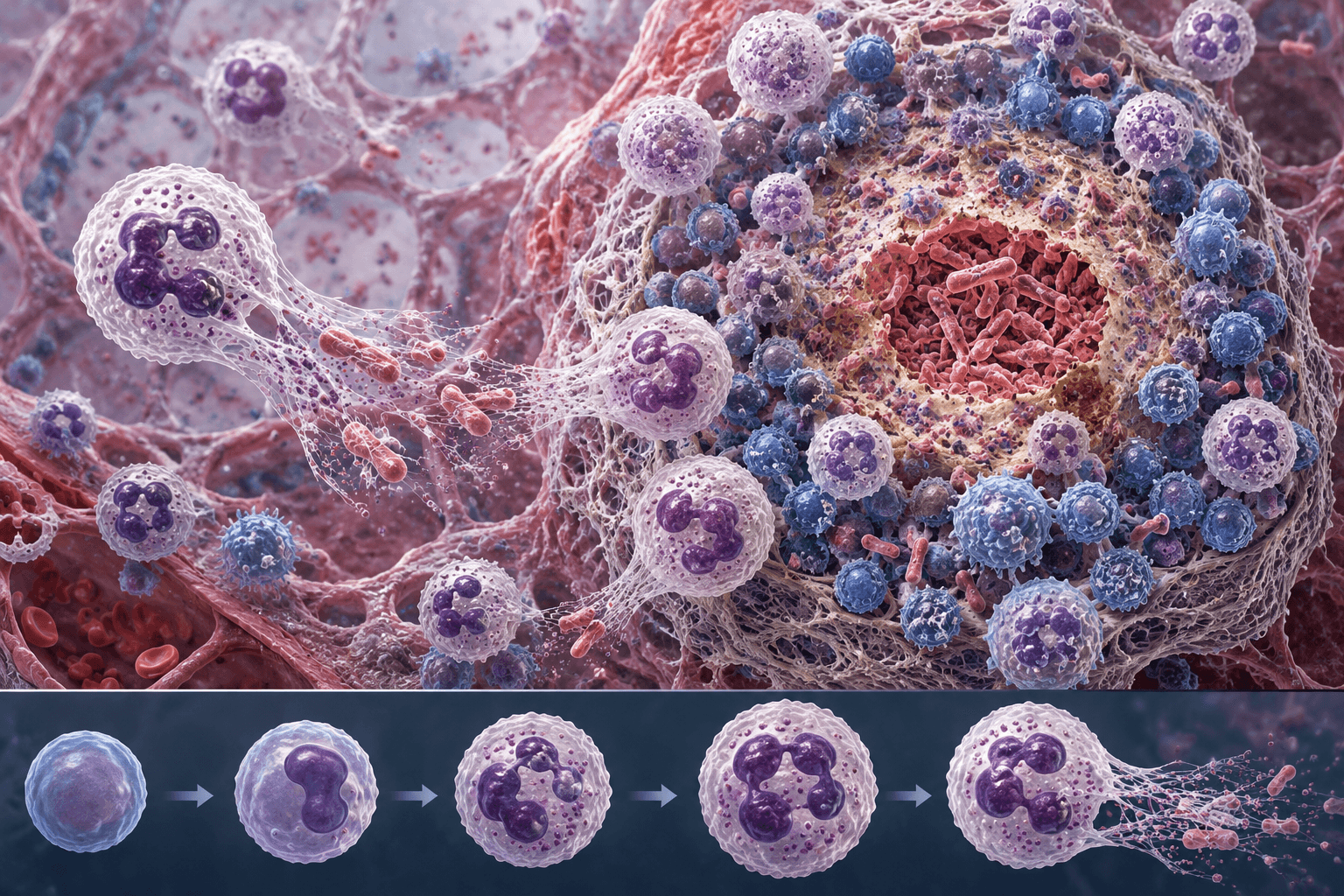
They also measured gene expression, displaying which genes became more active during infection. Researchers discovered a process called NETosis, where neutrophils release web like structures to trap bacteria, increased. Additionally, reactions including Reactive Oxygen Species, which are molecules immune cells are produced to help destroy harmful bacteria were upregulated.
They also studied how neutrophils interacted with T cells, another type of white blood cell that enhances the body's immune response.
Results
The results showed that neutrophils changed significantly as tuberculosis became more severe.
Key findings:
Animals with severe tuberculosis had higher levels of inflammation and more bacteria in their bodies.
Genes involved in inflammation and neutrophil activity became more active as the disease progressed.
Neutrophils transformed more immature and highly activated forms in animals with severe disease.
Early in the infection, neutrophils produced more NETs and reactive oxygen species, showing they became more active.
Neutrophils also increased the activity of CD8 T cells, helping them produce stronger immune responses.
Large numbers of neutrophils gathered inside lung granulomas, especially in areas where many T cells were present.
The neutrophils found inside lung tissue looked very similar to those found in the spleen, suggesting these immune cells change depending on where they are in the body.
Conclusion
The study concludes that neutrophils play a bigger role in tuberculosis than scientists previously thought.
As the disease progresses, these cells don't just fight bacteria. They also change how the immune system responds by increasing inflammation and interacting with other immune cells.
These findings help explain why some TB infections become much more severe than others and could further develop new treatments that are specific to increasing neutrophil calls for better prognosis.