
Introduction
With a recent increase in the interest in a plant-based diet, mainly to vegetarianism or veganism, there has been a growing body of evidence surrounding their positive benefits and also their potential risks. However, research into the same research in children is ill-defined and much less often studed. With rising micronutrient deficiency and obesity in nations like the UK (which this study focuses on), new evidence supports the potential benefits of a plant-based diet.
Studies have revealed deficiencies in vitamin B12, iron, and zinc, omnivores being deficient in calcium and vitamin D, and benefits of higher fiber and lower saturated fats. Diets high in red or processed meats have been linked to increased cancers, cardiovascular disease, and type 2 diabetes. Beyond this, there are significant environmental impacts associated with the production of animal-based foods, particularly red and processed meats. The study here aimed to analyze nutritional composition and carbon footprints of omnivorous, vegan, and vegetarian diets.
Methods
The data was collected from a cross-sectional study of dietary data from UK children. Recruitment took place in 2023 via online methods. Those included were children following the previously mentioned diets, aged between 2 and 12. The sample size was restricted to 15-45 children, a common number for dietary studies.
Dietary intake was assessed with three-day food diaries compiled by parents and cross-referenced with a comprehensive food database. Demographic data was also collected, as well as non-identifiable data such as sex, age, and ethnicity. These were used to help identify trends in data. The dietary data was then used to calculate macro and micronutrient intakes, where means were calculated for each dietary group and compared to UK dietary reference values in order to gauge the effectiveness of each diet and identify trends.
Product and ingredient lists were then compiled, and using this data of consumption, carbon footprint values were estimated at each level, contributing to a total value and showing any correlation between specific diets and carbon emissions.
Results
Overall, no dietary group met all the reference values, and the largest differences were usually in fiber, saturated fat, and micronutrients.
Shown below is a comprehensive image detailing the nutritional averages of each diet in comparison to recommended values:
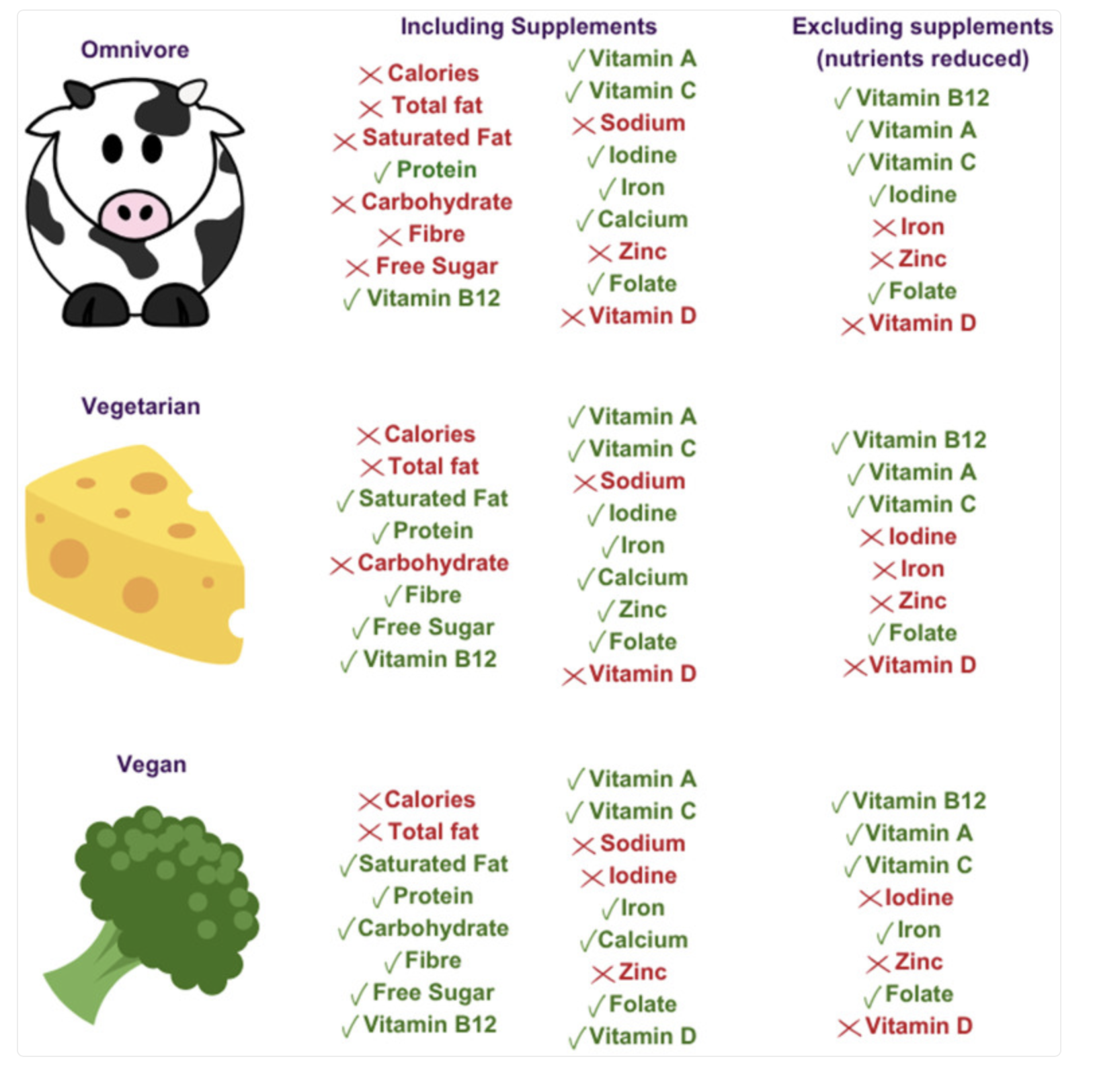
Plant-based diets had fiber intake higher than the recommended levels, unlike omnivore diets. The omnivore diet was also above the recommended saturated fat levels, whilst the plant-based diet was below.
The main differences between vegans and omnivores were in fiber and saturated fat, as well as vitamins A, C, B12 (the most significant difference, as vegans lacked B12), and D. The omnivores typically lacked folate, fiber, and vitamins A and C. Vegetarians were shown to consume less fiber and vitamin D than vegans, with more saturated fat.
Supplement usage did show multiple differences, with vitamin D being the most glaring, as all groups were deficient without supplements, and only vegans were able to meet the recommended level with supplements. Iodine and zinc were also low, and vegans failed to meet recommended levels even with supplements.
In terms of other metrics, all dietary patterns did exceed the recommended protein. intake, but fails to meet energy and total fat intakes. In energy, the carbohydrate contribution was mostly met, with the fat contribution failing to be met a lot. The omnivorous diet was higher in protein, but the other two diets met the standard or were only slightly off.
There were significantly different carbon footprints between diets: the highest was seen in omnivorous diets, followed by vegetarian and then vegan. It is important to note the little different between vegan and vegetarian diets compared to the much larger difference in omnivorous diets. This is likely due to the production of animal products, specifically meat, producing an incredibly high amount of carbon emissions compared to agriculture.
It is important to note the biases and limitations here. The study only studied UK children, so regional differences may lead to slight diet disparities compared to the rest of the world. Furthermore, the children were all likely higher class due to the high involvement in digital reporting and digital components of the study. In different classes of society, diets may significantly differ. Furthermore, there is always the chance of misreporting, as much of the data comes from parent reports that may unintentionally misreport data.
Conclusion
There were multiple nutrient differences, whether surpluses or deficiencies between diets, with these mainly coming in the micronutrients, as well as in saturated fat and fiber, with plant-based diets tending to have more fiber and less saturated fat, and vice versa for omnivorous diets. The omnivorous diets also seemed to produce more carbon emissions in comparison to the two other diets.