Introduction
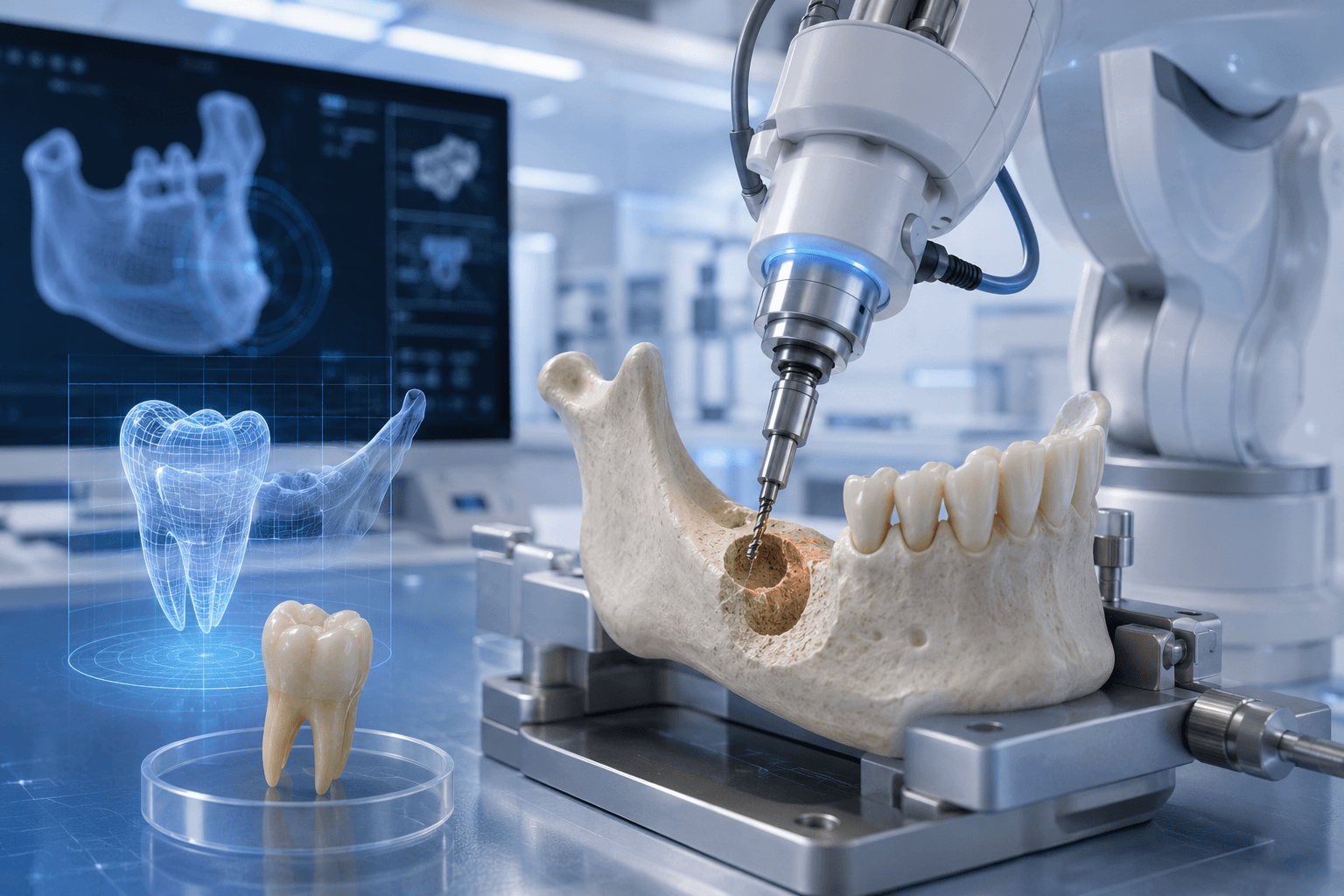
The study investigates whether an autonomous robotic system can improve tooth autotransplantation, which is defined as moving a tooth from one location in a person's mouth to another. This process is often used to replace missing teeth while preserving the tooth and surrounding tissues.
One of the biggest challenges in tooth autotransplantation is preparing the socket of the person receiving it. The socket is the space in the jawbone where the transplanted tooth will be placed. The socket must closely match the shape of the donor tooth's root to ensure stability and proper healing.
The researchers developed a robotic system capable of creating a socket that closely follows the three-dimensional shape of the donor tooth. They compared the performance of this system with a static surgical guide, which is a tool commonly used to help dentists position drills during surgery.
Methods
The researchers conducted a vitro study where a total of 40 three-dimensional printed jaw models were created, representing both single-rooted and double-rooted teeth. Before preparing the socket, a digital model of the donor tooth was used to design the socket that was slightly larger than the tooth root, allowing enough space for healthy tissue to heal after transplantation.
Two different preparation methods were compared:
An autonomous robotic system that automatically followed a preplanned three-dimensional milling path to shape the socket.
A static guide-assisted method, where a surgical guide directed the drilling before the remaining shaping was completed manually by the operator.
After each socket was prepared, the researchers compared it with the original digital plan to measure how accurately each method reproduced the intended shape.
Analysis
The analysis focused on surgical accuracy, which is defined as how closely the prepared socket matched the planned design.
The researchers compared several factors, including:
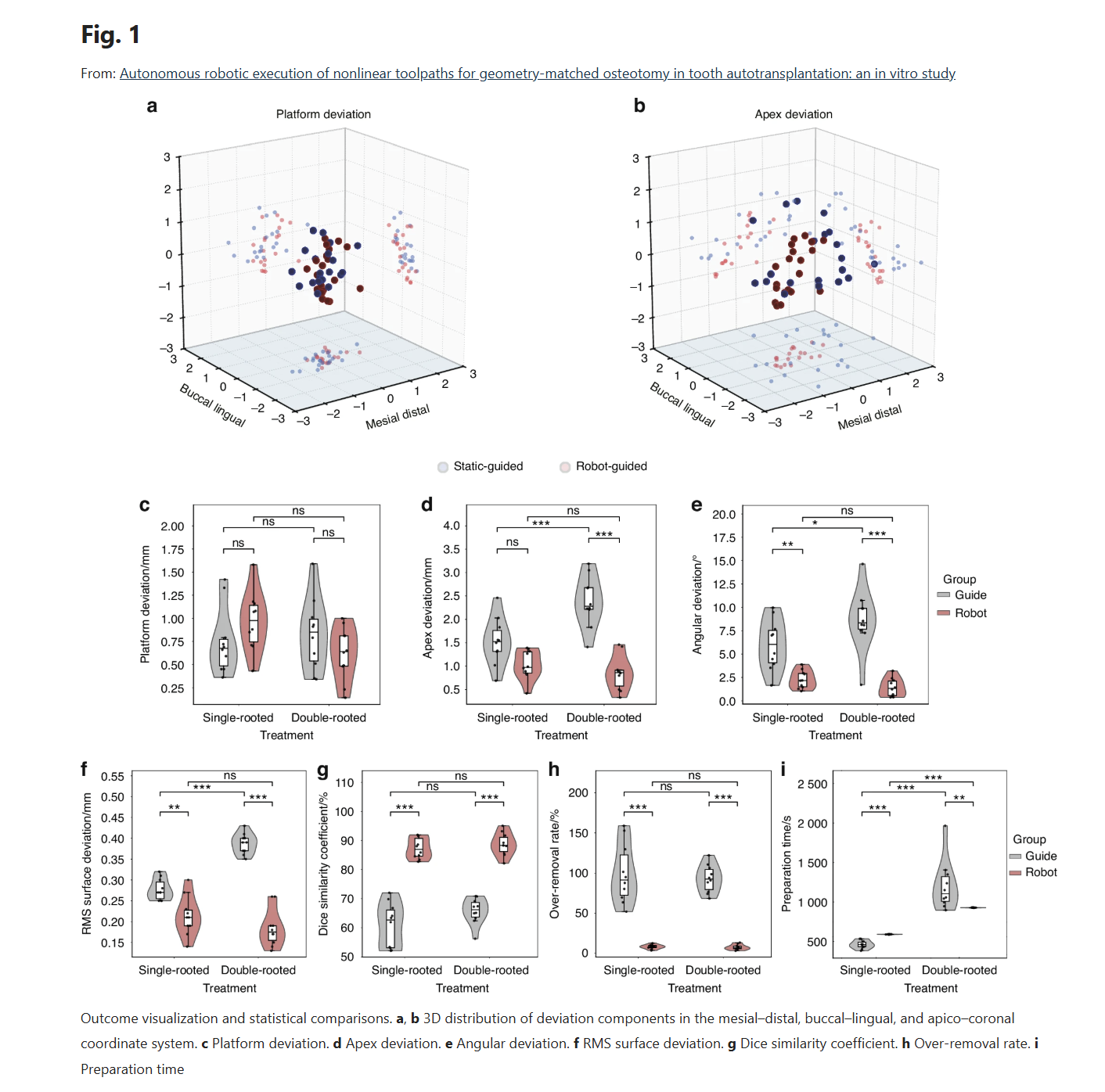
Platform deviation, which measures how accurately the drilling began at the planned entry point.
Apex deviation, which measures how closely the deepest part of the socket matches the planned location.
Angular deviation, which measures differences in the drilling angle.
Surface deviation, which compares the overall shape of the prepared socket to the planned socket.
Over removal of bone, which measures how much unnecessary material was removed during preparation.
Preparation time, which measures how long each technique took to complete.
The researchers also compared results between single-rooted and double-rooted teeth to determine whether tooth complexity affected performance.
Results
The results showed that the robotic system produced sockets of the receiving person that were more accurate than those prepared using the static surgical guide.
Key findings showed that the robotic system created sockets that more closely matched the planned three-dimensional shape and significantly reduced errors at the deepest part of the socket compared with the guide-assisted method. In addition, robotic preparation maintained a more accurate drilling angle throughout the procedure, leading to the robot removing far less unnecessary bone, helping preserve surrounding healthy tissue.
The greatest improvements were seen in double-rooted teeth, which have more complex root shapes and are generally more difficult to prepare accurately. Overall preparation time was similar between the two techniques, although the robotic system completed more complex cases more efficiently. To summarize, the robotic system consistently produced more precise socket preparations while preserving more of the surrounding bone.
Conclusion
The study concludes that autonomous robotic technology can improve the accuracy of the receiving person’s socket preparation during tooth auto transplantation.
By closely matching the shape of the donor tooth while minimizing unnecessary bone removal, the robotic system may increase the chances of successful transplantation and reduce complications caused by bad socket fit.
Although the study was performed using laboratory models rather than real patients, the findings suggest that robotic-assisted surgery has strong potential to improve tooth autotransplantation, especially in cases involving complex root anatomy. The researchers recommend further clinical studies to determine how well this technology performs in actual dental procedures.