Introduction:
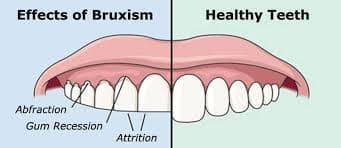
Bruxism is classified as a sleep-related movement disorder that occurs through repeated grinding, clenching, or pressing of the teeth. Although bruxism is not classified as a harmful disease, frequent or intense bruxism can lead to oral health concerns such as tooth wear, jaw pain, headaches, etc. This habit is prevalent throughout the world, especially in academic stress, where students unconsciously grind their teeth to alleviate stress. In fact, those in demanding health-related programs such as dentistry have faced this problem due to heavy responsibilities.
This study investigated whether self-reported bruxism was associated with academic performance among dental students at Jazan University. Factors such as stress level, gender, and socioeconomic status were accounted for to keep the results unbiased. Rather than focusing only on whether students reported teeth grinding, the researchers examined whether bruxism was related to stress and grade point average (GPA).
Methods:
The study used a cross-sectional design to identify patterns or associations between stress, bruxism, and academic performance among dental students. The study’s sample included 168 undergraduate dental students from Jazan University, with 73 being male and the other 95 being female. The account of bruxism was measured using a self-report questionnaire, where all responses remained anonymous. Students in the survey reported whether they experienced habits such as grinding or clenching their teeth. Regarding academic performance, the main indicator of academic achievement was the GPA. Additionally, researchers collected information about stress and background factors such as gender and socioeconomic status.
Several statistical tests were used to analyze the data. Independent t-tests and one-way ANOVA were used to compare differences between groups. Similarly, Spearman's correlation was used to examine whether two variables were related to each other. For example, whether students with higher stress levels reported higher bruxism scores. Finally, to determine whether the study's results were significant, the team accounted for a p-value score. In research, a statistically significant result suggests that the pattern observed is unlikely to have occurred by chance alone.
Results:
The study found that self-reported bruxism was prevalent among the dental students. Overall, 66.25% of participants reported experiencing bruxism, meaning that about two out of every three students in the study reported some form of tooth grinding or clenching. Bruxism can be correlated with the stress and pressure associated with dental school.
Stress showed a meaningful relationship with bruxism, where researchers reported a correlation value of r = 0.268 between stress levels and bruxism scores. In this study, students with higher stress levels also tended to have higher bruxism scores. The value 0.268 shows a moderate positive relationship, meaning the connection was noticeable but not extremely strong.
The researchers also reported p < 0.01 for the relationship between stress and bruxism. A p-value below 0.05 is usually considered statistically significant. Since this study’s p-value was below 0.01, the relationship between stress and bruxism was considered statistically significant. In simpler terms, the data strongly suggest that stress and bruxism were connected in this group of students.
The study also found differences between male and female students. Male students had an average bruxism score of 36.86, while female students had a higher average score of 42.14. This difference suggests that female students in the study reported more severe bruxism symptoms than male students. The researchers also observed that females with higher GPAs and lower socioeconomic status had higher bruxism scores compared with males. This may suggest that academic pressure and personal circumstances could influence stress-related oral habits, although further research is needed before making a firm conclusion.
In contrast, academic performance itself was not strongly related to bruxism. The relationship between GPA and bruxism score was r = -0.034. Since this number is very close to zero, it shows almost no relationship between GPA and bruxism. The negative sign means that as GPA increased, bruxism scores slightly decreased, but the relationship was so weak that it was not meaningful. The study also reported p > 0.05, meaning the result was not statistically significant. Therefore, the study did not provide strong evidence that students with higher bruxism scores had worse academic performance. Overall, the findings suggest that bruxism may be more closely connected to stress than to GPA.
Several limitations should be considered. Because the study was cross-sectional, it can only show an association between stress and bruxism, not prove that stress caused bruxism. Bruxism was also measured through self-reporting, which may be inaccurate because some students may not know they grind their teeth, especially during sleep. In addition, the study included students from only one university in Saudi Arabia, so the findings may not apply to all students. Finally, the study did not fully explain the biological mechanism connecting stress and bruxism, so further research is needed.
Conclusion:
This study suggests that bruxism is common among dental students and is more strongly linked to stress than to academic performance. Although 66.25% of students reported bruxism, GPA showed almost no meaningful relationship with bruxism scores, while higher stress levels were significantly associated with higher bruxism.
These findings matter because bruxism can affect oral health, sleep, comfort, and overall well-being. Future studies should include larger, more diverse student groups and use clinical exams or sleep monitoring to confirm bruxism. Further research should also explore whether stress-reduction strategies can help lower bruxism symptoms.