
Introduction
With the ease of food delivery apps such as DoorDash, obesity and weight are becoming growing concerns. Frequently, people mention the "calorie deficit", or taking in fewer calories than expended. Few sources have done research as to whether adjusting the time frame for calorie consumption affects weight loss. A study in the Obesity journal decided to answer these very questions.
Methodology
Researchers recruited 93 (average age 45.8) clinically obese women and then separated them into a breakfast group and a dinner group. The plan for the BF (breakfast) group consisted of a large breakfast (700 calories), medium-sized lunch (500 calories), and a small dinner (200 calories). The D (dinner) group showed the opposite: a small breakfast, medium-sized lunch, and large dinner.
The exact contents of their meals are shown below:
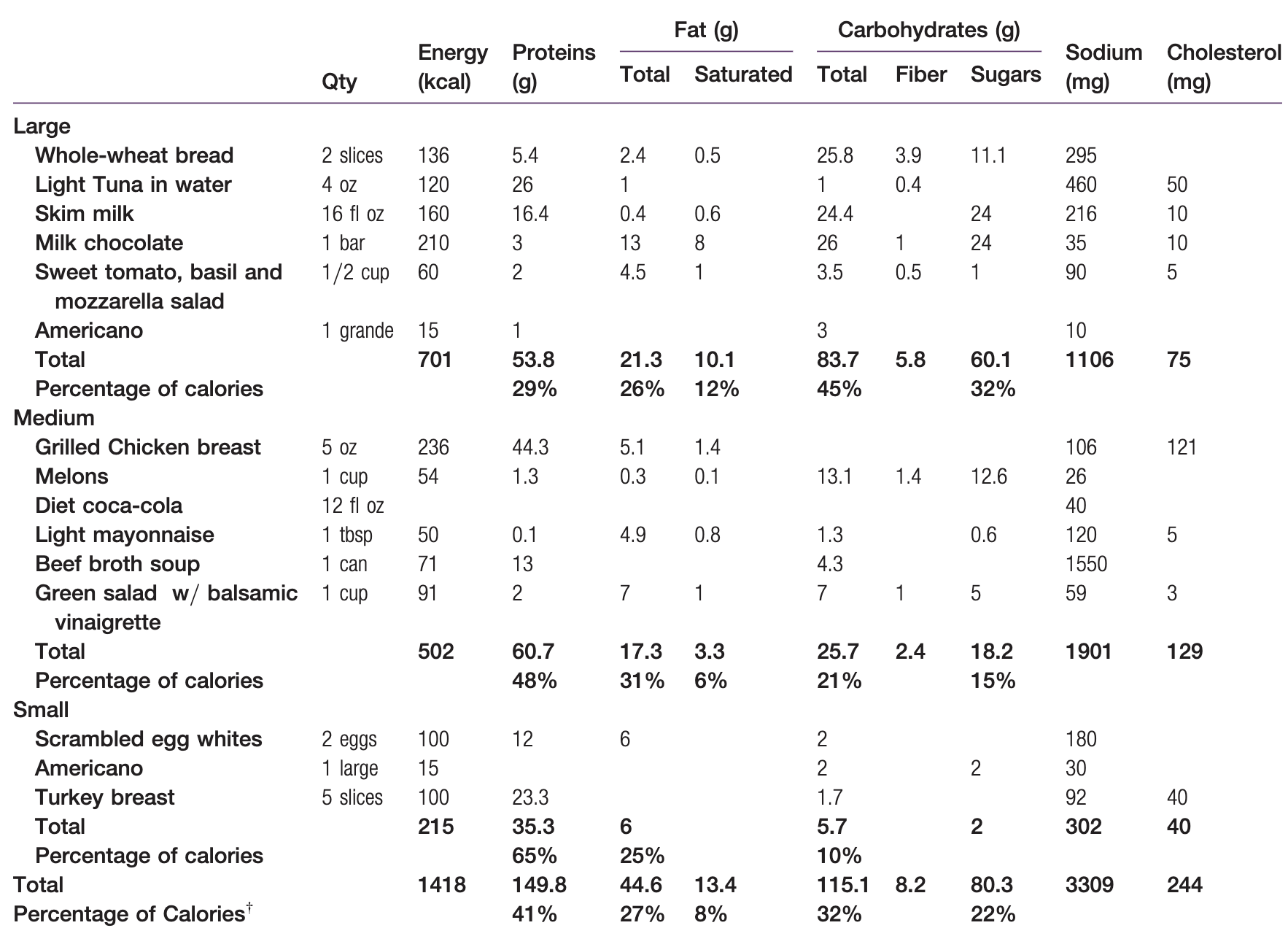
Table 1. Meal breakdown and nutritional values
Each day, each participant reported to the laboratory at 7:00 am after an overnight fast. A catheter was placed 30 minutes later and not removed until 8:00 pm. Baseline samples of glucose, insulin, and ghrelin were taken. Each group consumed their assigned meal plan (breakfast at 8:00 am, lunch at 1:00 pm, dinner at 7:00 pm). The test meals were consumed in their entirety within 15 min. Blood samples were collected 30, 60, 120, and 180 min after breakfast, lunch, and dinner for glucose, insulin, and ghrelin.
The study went on for 12 weeks. Body weight, blood pressure, and waist circumference were recorded every 2 weeks. An OGTT (oral glucose tolerance test) was administered at baseline and after 12 weeks.
Results
The results can be seen below:
Figure 1.
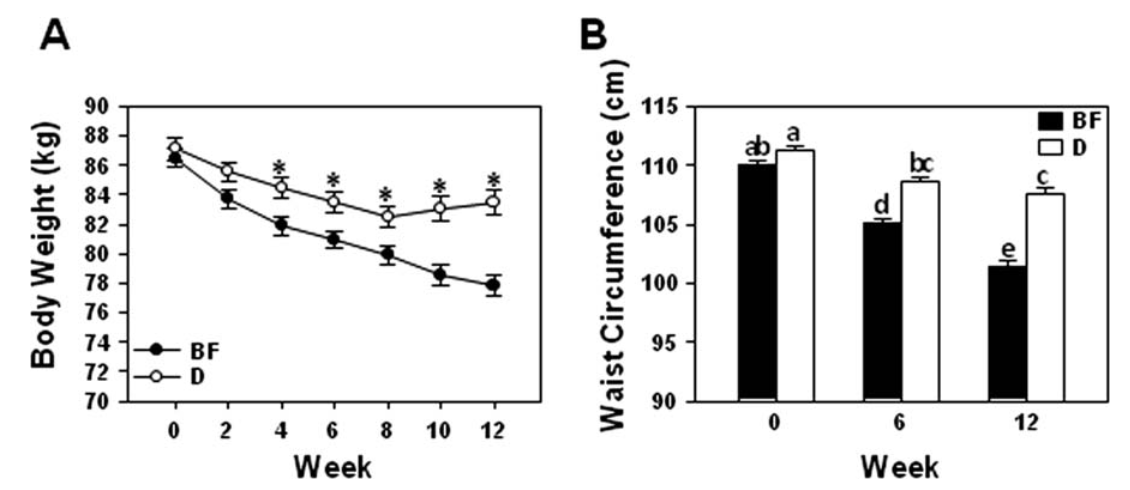
Table 2. Participants' anthropometric and blood measurements
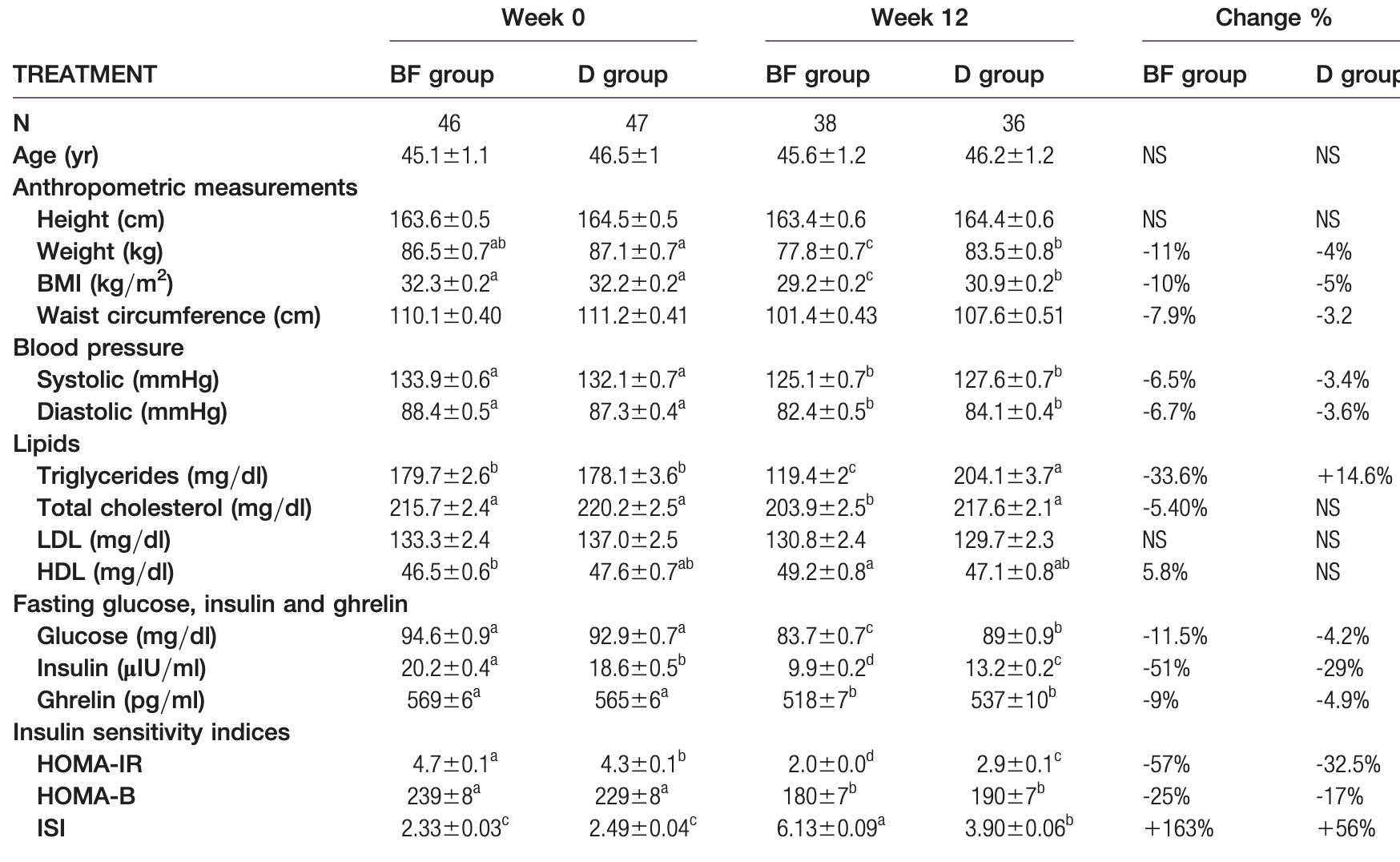
The BF group saw significantly more weight loss and a reduction in waist circumference. There was also a larger drop in blood pressure, triglyceride levels, blood sugar levels, and more. HOMA-IR stands for Homeostatic Model Assessment for Insulin Resistance, and a lower score means a better insulin response. HOMA-B stands for Homeostatic Model Assessment of Beta-Cell Function. It is a calculation used to estimate how well the beta cells in the pancreas make insulin.
Conclusion
Overall, the study shows that a high-calorie breakfast diet allowed for greater weight loss and overall health. Reducing calories during dinner might significantly impact weight loss. However, the study is not without limitations. Only obese, older women were investigated, and the same results may not hold or be as prominent in other demographics. More research should be done into the long-term effects of high-calorie consumption in the morning.