Introduction
Creatine is an extremely common supplement, with many gym-goers taking it to increase muscle mass and water retention. However, there is a persistent fear among many creatine users that creatine can lead to male pattern baldness. Many people believe that creatine facilitates the conversion of testosterone to DHT, something that has been shown to lead to increased rates of balding. As a result of these fears, researchers have sought to determine the effect of creatine on hair follicle health and on hormone levels that may potentially contribute to male pattern baldness.
Methodology
The study involved the recruitment of 45 resistance-trained males, selected and tested via online advertisement. Participants chosen were between 18 and 40 years of age. Participants who were chosen had not taken creatine for at least 3 months, were not taking hair-loss medications, and all were screened for conditions that may cause hair loss. 6 people dropped out before the study began, and 1 participant in the group that took creatine dropped out. Participants were split into 2 groups: one creatine group that would take the supplement, and one placebo group that would not. Participants in the creatine group took 5 grams of creatine monohydrate daily, while the placebo group took an equivalent amount of maltodextrin. Participants were not told what group they were in, and the specific researchers who would be collecting their samples were not either. The participants were instructed to maintain their normal diets and training routines. Baseline blood samples were taken, and blood was drawn again at the end of the study. Measures for the following biomarkers were taken: estimated glomerular filtration rate (eGFR), creatinine, total testosterone, free testosterone, and dihydrotestosterone (DHT). Hair health was further measured using the Trichogram test, a test that can identify the proportion of hairs in different phases of the hair growth cycle.
Results
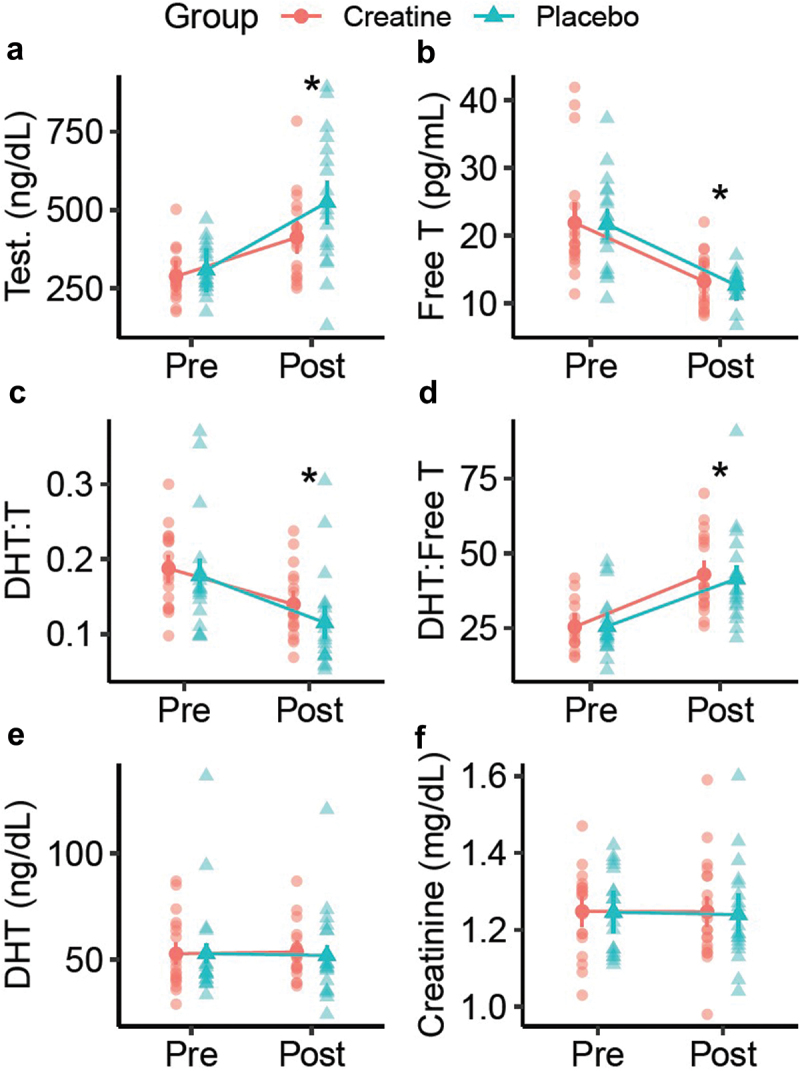
Figure 3. Hormonal Changes
The graphs above show the levels of different levels of the hormones measured.
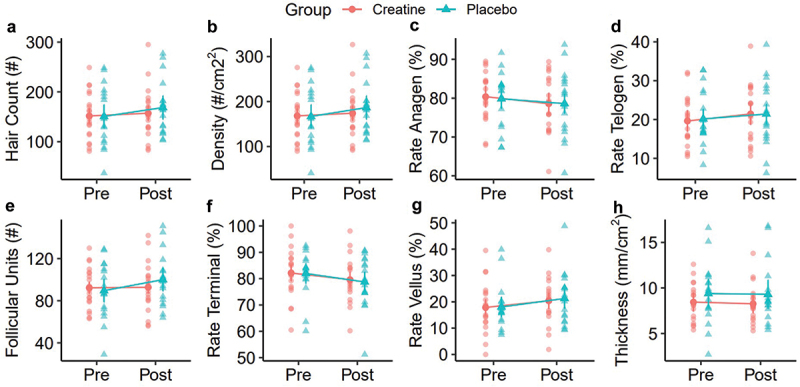
Figure 5. Hair Outcomes
The graph shows the number of hair follicles (follicular units), hair density and count, and the percent of hairs in anagen and telogen. It also describes the percentage of the hair that is vellus hair.
The only significant change as a result of creatine intake was a decrease in testosterone levels. The levels of the other hormones do not show significant differences between the placebo and creatine groups. The proportions of hair in each stage of the hair cycle stay nearly the same.
Conclusions
The study contradicts the popular belief that creatine causes hair loss. There is no significant change in hair density and follicle health. Furthermore, the fact that DHT levels stay the same indicates that testosterone changes were due to external circumstances, such as lifestyle changes.
Some limitations of the study include the limited time period. There may potentially be effects with longer exposure and higher dosage of creatine. Furthermore, some confounding factors were not checked, including family history, which is known to play a significant role in balding. As a result, the study concludes that creatine is a safe bet for building muscle and improving exercise, even for people who are scared of balding.