
Introduction
Whole-food plant-based diets (WFPBDs) have high levels of potassium. High potassium diets have shown to reduce blood pressure in patients with hypertension. WFPBD has not yet been studied in people with chronic kidney disease (CKD) due to the concern of hyperkalemia, which are high potassium levels in the blood. The authors of this study hypothesized that people with CKD 3 who receive a 15-day WFPBD education program will experience lower blood pressure compared to those who did not receive the education program, without an increased risk of hyperkalemia.
Methods
40 subjects with CKD and hypertension were randomized into two groups. The main exclusion criteria included diabetes and proteinuria. One group received the 15-day WFPBD education program and the other did not receive the education program. The blood pressure and potassium levels were studied in both groups. Other values were assessed such as electrolytes, protein, and cholesterol levels.
Results
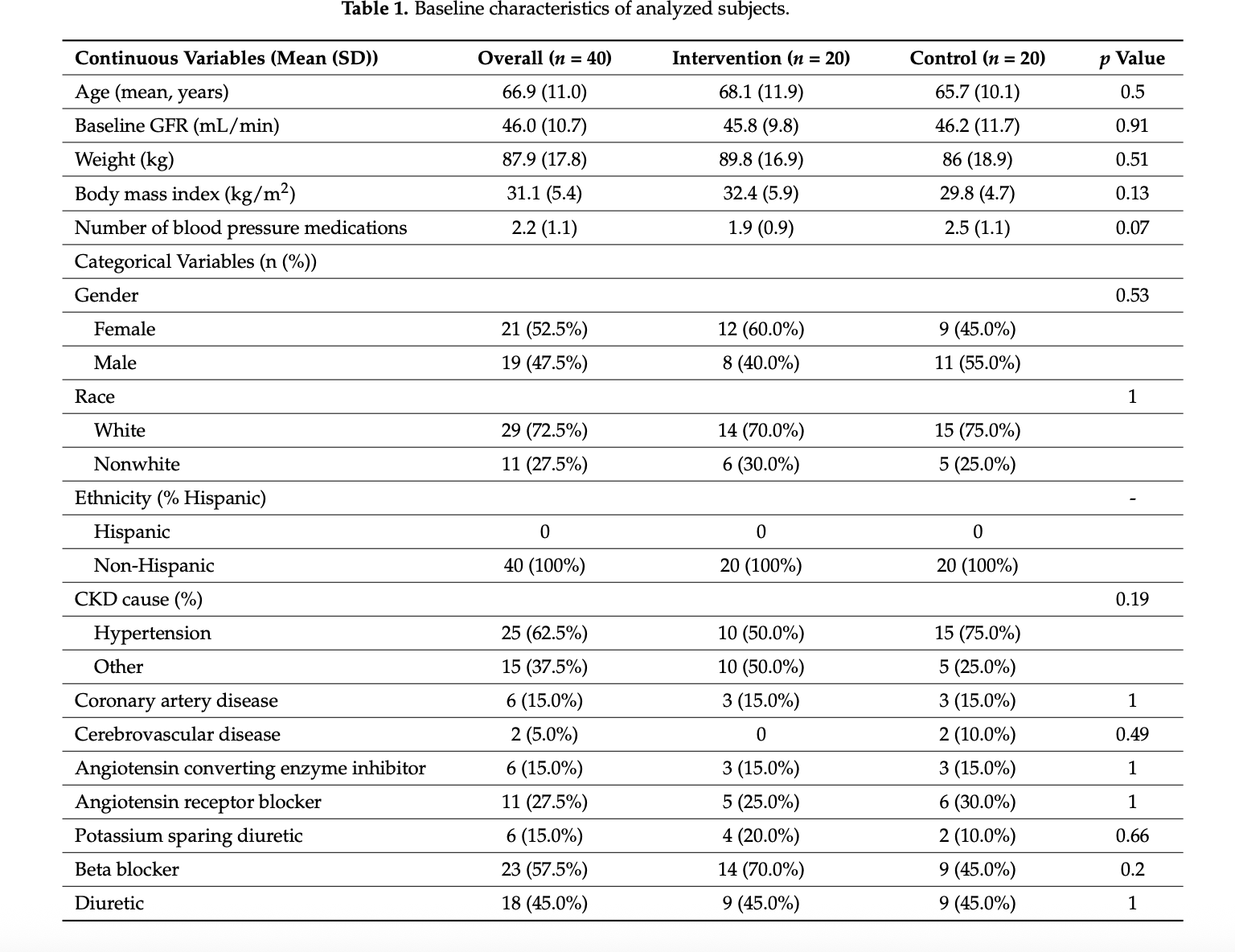
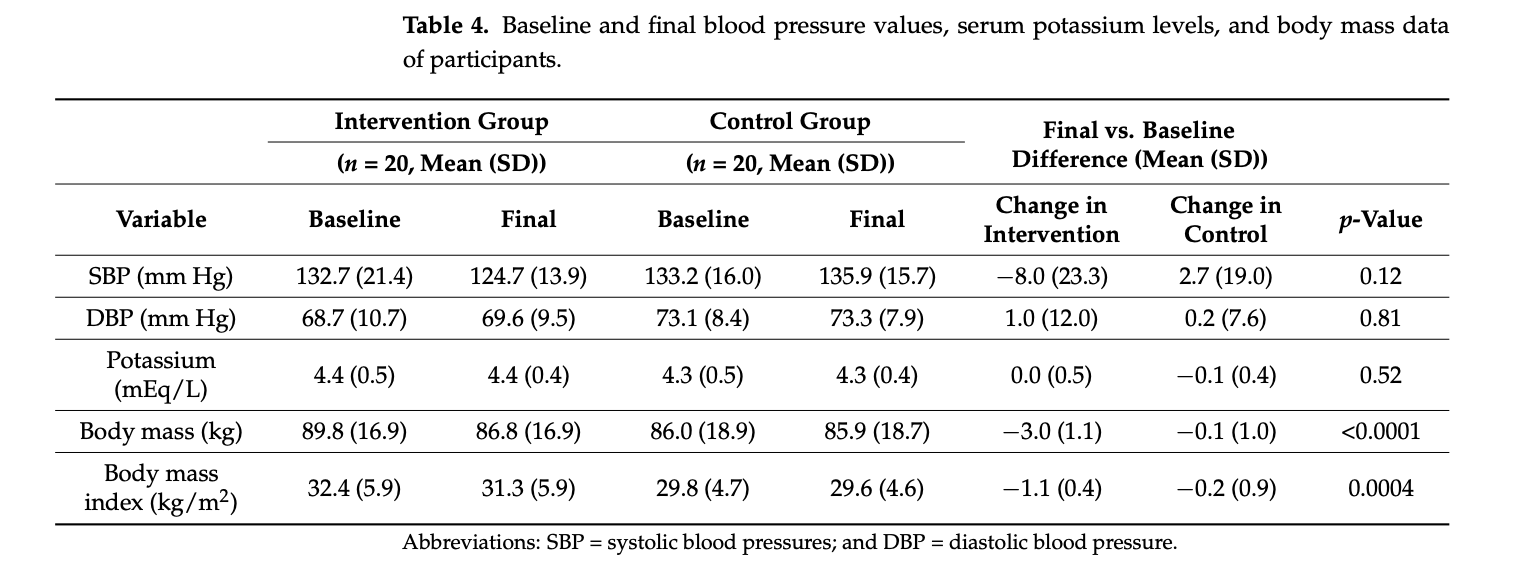
Systolic blood pressure in subjects who received the WFPBD education program decreased by 8 mm Hg and increased by 2.7 mm Hg in the control group, although not statistically significant (p=0.52). Diastolic blood pressure was not different between the two groups. Other factors changed in the subjects who received the WFPBD education program such as decreases in body mass and cholesterol compared to the control group.
Limitations
It was a single center study. Therefore, the experiment may not represent a diverse patient population. The study was conducted for a 15-day duration, which may not be long enough to see different outcomes and could reduce the accuracy of the data collected.
Conclusion
Patients with CKD have a high risk of hyperkalemia. This study shows that WFPBD diets could reduce blood pressure in patients with CKD without worsening hyperkalemia.