Introduction
Affecting nearly 10% of the world population, inflammatory acne is the main cause of visits to dermatological medical offices. Being the eight most prevalent disease in the world, it results in scars, post-inflammatory hyperpigmentation, and many psychological effects.
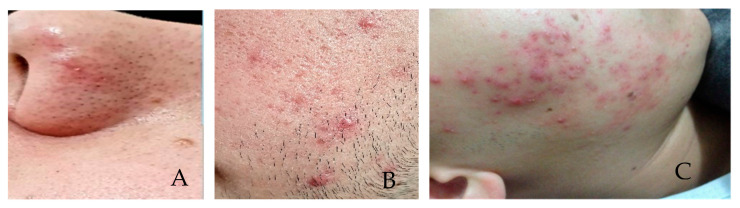
Figure 1. Variations of acne stages. (A) Acne—Grade I (B) Acne—Grade II—(C) Acne Grade III (source: personal file).
Conventional treatments, including topical retinoids, antibiotics, and more, are effective for many patients but are frequently associated with side effects such as skin irritation.
To address the limitations of conventional treatment, researchers have searched for alternative treatments with fewer side effects. This review was done to evaluate the clinical evidence supporting blue light phototherapy as a treatment for inflammatory acne vulgaris by comparing its effectiveness and safety with conventional therapies.
Methods
This study is a systematic review. By searching the PubMed and other databases, the study evaluated eight published randomized controlled clinical trials that investigated blue light phototherapy for inflammatory acne.
This study strictly follows the guidelines proposed by the international network Enhancing the Quality and Transparency of Health Research (EQUATOR). The project was registered in OSF (Open Science Framework) platform.
With the bibliographic search following the Preferred Reporting items for Systemic Reviews and MetaAnalyses (PRISMA) guidelines, this review aims to answer this question: what is the evidence for the action of blue light in improving acne concerning conventional treatments?
Across the included studies, participants with inflammatory acne received blue light therapy with different treatments and conditions. The treatment outcomes were evaluated through acne severity grading scales, sebum production, lesion size, clinical photographs, and personal questionnaires.
Results and Limitations
Overall, the studied clinical trials demonstrated that blue light phototherapy significantly improved acne conditions in participants while also producing fewer adverse effects than many conventional treatments. Specifically, improvements ranged from approximately 35% to over 80%.
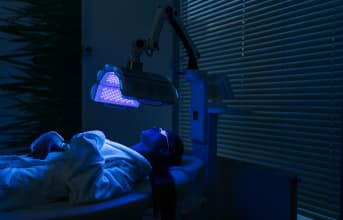
Blue light therapy works by activating porphyrins naturally produced by Cutibacterium acnes. This generates reactive oxygen species that destroy acne-causing bacteria while reducing inflammation, which suggests that blue light phototherapy is an effective non-invasive treatment option for patients with inflammatory acne.
However, limitations of blue light therapy are that the varying treatments making direct comparisons between studies difficult; the differing study designs and measurements may lead to difficult comparison across them.
Conclusion
This review demonstrates that blue light phototherapy is a safe and effective treatment for inflammatory acne vulgaris. Across all the clinical studies considered, this therapy consistently resulted in noticeable improvements in acne severity and overall skin appearance while having significantly reduced side effects. Thus, it is recommended to have future large-scale randomized controlled trials using standardized treatment parameters to further establish its long-term effectiveness and develop consistent clinical treatment guidelines.