Introduction
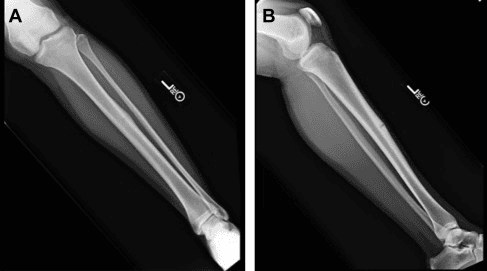
Tibial Stress Fractures are very common in athletes, especially runners, caused by the constant stress athletes are required to apply force on their tibia. It creates microfractures from an unbalanced bone formation, when one’s osteoblasts cannot keep up with the osteoclasts. The human body is not able to repair itself fast enough, and athletes will be put out of commission for some time. This is an overview of how tibial stress fractures are caused and how they can be treated.
Methods
Athletes were studied over a long period of time and were consistent in their training. They all had tibial stress fractures, and different surgical and non-surgical methods were used to treat them. Plain radiographs (x-rays) are first used since they are quick and cheap, but cannot see early stages of a fracture. Using an MRI allows for the best imaging and detail, which allows researchers to compare the time it took to heal and return fully to their sport, accounting for the different locations of the tibia fracture.
Results and Limitations
Also looking at other studies, it was found that it is best for most fractures to heal conservatively (non-surgically), but some high risk fractures do require surgery. Tibial stress injuries are classified between high-risk and low-risk to implement specific treatments based upon the person’s needs. Given enough time, low-risk fractures heal perfectly with rest using the osteoblasts and osteoclasts, not damaging the tibia. On the contrary, high-risk fractures require surgeries that could fail, leading to an extended recovery, but still require rest to naturally heal conservatively.
There is no singular specific method to help treat tibial stress fractures. Different athletes have different severity of fractures, requiring different needs. It is hard to compare what methods actually work since overall, it relies on the human body to heal itself. This also doesn’t have any control groups, so it is hard to understand which method is found to be most efficient.
Conclusion
The best way to heal for a tibial stress fracture is the rest, letting it heal on its own. It also depends on the severity and location of the fracture, as higher-risk injuries may require surgical intervention to ensure proper healing. Ultimately, effective recovery relies on balancing appropriate treatment with sufficient time for the body to heal, so athletes can safely return to their sport without further injury.