Introduction
The three primary sugars that are consumed in the human body are glucose, sucrose, and fructose. Glucose is the predominant form of sugar in animals, while sucrose, composed of both glucose and fructose, is predominant in plants. Fructose, in the form of corn syrup, is a sugar that is added to several manufactured products. It is among the sweetest of sugars and enhances food palatability. An increasing amount of high-fructose corn syrup is present in sugar-sweetened beverages (SSB), which are a major source of added sugar in diets around the world. SSBs include sodas, fruit-flavored drinks, and sport drinks. SSB makes up approximately 7% of daily calories and 50% of added sugars in the diet. Other contributors to the daily sugar intake are candy and desserts.
Discussion
There is a controversy over whether increased sugar consumption is a major contributor to obesity, type 2 diabetes, and nonalcoholic fatty liver disease. The relationship between sugar intake and cardiometabolic disease is inconsistent. However, increased SSB consumption is consistently associated with higher cardiometabolic risk. Greater SSB intake leads to increased visceral adiposity, which contributes to weight gain and eventually to cardiometabolic diseases. A casual association demonstrated that intake of 1 liter of SSB daily for 6 months increased visceral and liver fat, but was not observed in those consuming healthy options such as isocaloric semiskin milk, noncaloric diet soda, or water.
Greater SSB consumption can lead to a major risk factor of cardiovascular disease called hypertriglyceridemia. It can also increase the risk of developing hypertension, but may play a lesser role compared to other cardiometabolic risk factors. Overfeeding fructose, but not glucose, can impair circulating lipids and insulin sensitivity in humans, which contribute to the formation of metabolic diseases.
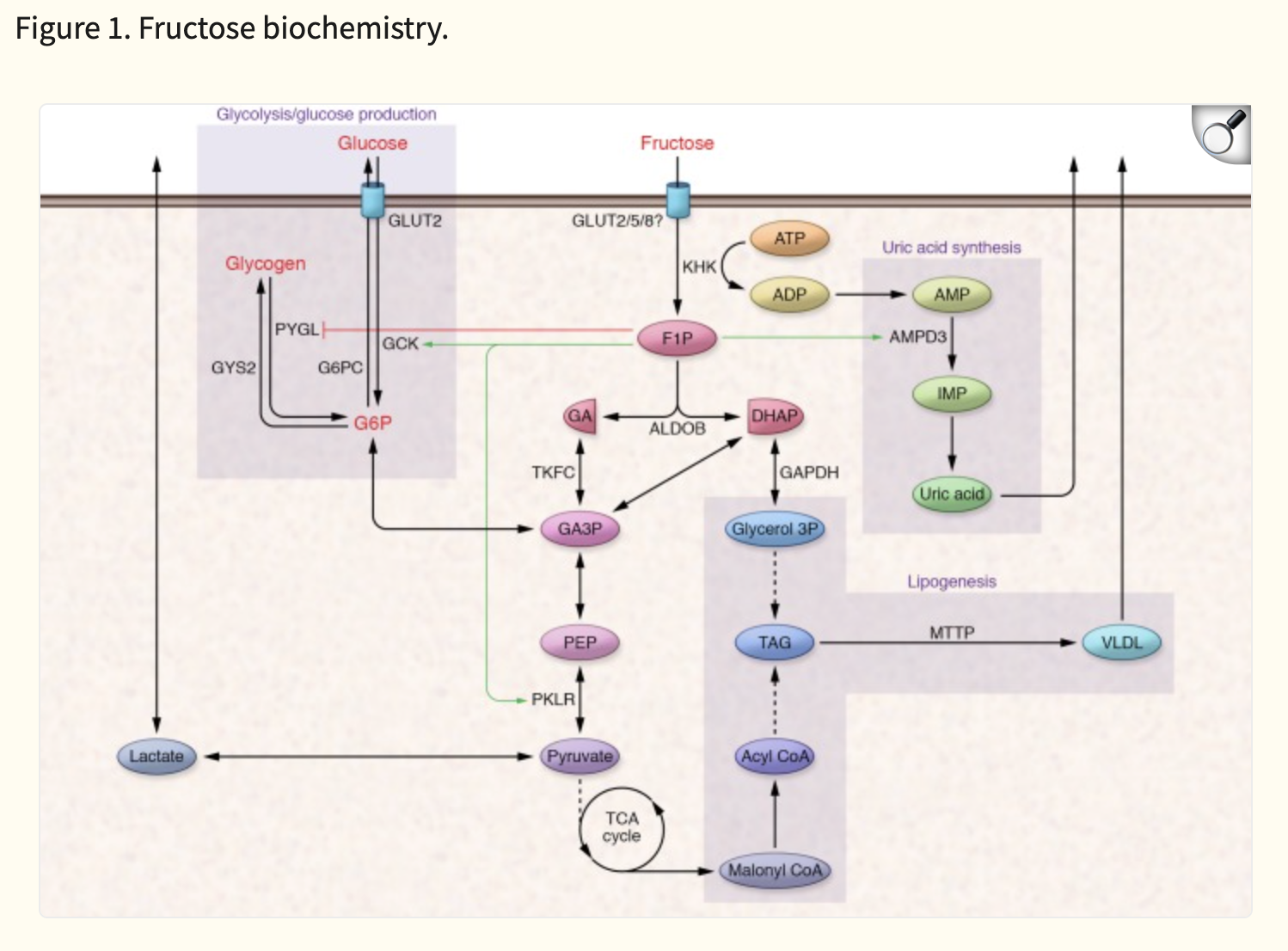
While the liver extracts only 15% to 30% of ingested glucose, it can extract 70% of an oral fructose load. This causes fructose concentrations, about 0.04 mM, in peripheral plasma to increase 10-fold after consumption. Although the rapid extraction of ingested fructose is important in nutritional and systemic metabolism, excessive fructose can increase uric acid production and the risk of gout. Elevated serum uric acid levels and gout are also associated with cardiometabolic risk factors.
GLUT5 is a specialized membrane transport protein that has a high affinity for fructose. A study with GLUT5-knockout mice demonstrated that high-fructose feeding caused the mice to suffer from generalized malabsorption and become ill when faced with fructose. Due to the lack of absorption, the mice were protected from fructose-induced hyperuricemia, which may impair kidney function and lead to hypertension. However, the effects of increased fructose consumption on hypertension are less well characterized than its effects on glucose and lipid homeostasis and must be further investigated.
Conclusion
In summary, SSBs play a significant role in the development of cardiometabolic diseases. Several public health agencies, including the American Heart Association, the World Health Organization, and the Dietary Guidelines Advisory Committee, support dietary recommendations and programs to limit sugar consumption. While it may be challenging to find safe thresholds for sugar consumption and alter dietary habits, effective implementations are absolutely crucial, especially now. If left unchecked, it may lead to an even more alarming increase in cardiometabolic risk and metabolic diseases than today.